| |
|
|
|
| (1) |
Brian's Theme |
| (2) |
The Burning of Boruma |
| (3) |
Gathering the Dal gCais |
| (4) |
Mystical Powers |
| (5) |
Lá Ollamh |
| (6) |
Saint Patrick's Cross |
| (7) |
Stone of Destiny |
| (8) |
Aisling |
| (9) |
Brian Boru's March |
| (10) |
Tree of Sorrows |
| (11) |
My Reign is Over |
| (12) |
Epilogue - 'Kincora' |
Get Maurice Lennon recordings online
Sleeve Notes
Produced by: Donal Lunny
Arranged by: Maurice Lennon & Donal Lunny
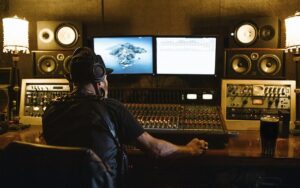
Recording Engineer: Seamus Brett
Mix Engineer: Tim Martin
Recorded at: Beechpark Studios & Silverstream Studios
Mixed at: Totally Wired
Mastered at: Mid-Atlantic Digital
Design: Creative A.D.
Musicians:
Maurice Lennon - Fiddle & Vocals
Donal Lunny - Bouzouki, Bodhran, Guitar, Keyboards & Vocals
Anthony Drennan - Lead Guitar
Seamus Brett - Keyboards & Programming
Máirtín O'Connor - Accordion
Noel Eccles - Percussion
Greg Boland - Programming
Tony Molloy - Bass Guitar
Helen Davies - Metal Strung Harp
Brian Lennon - Flute & Whistles
Mick O'Brien - Uilleann Pipes & Whistles
Mikey Smith - Uilleann Pipes & Whistles
Guest Vocalist - Sean Keane
Track Notes
1) Brian's Theme:
Brian Bóru was born in Ireland in 941. Tribal warfare was a way
of life, but the arrival of the Vikings from Scandinavia had added
a new element. They pillaged monasteries and sold Irish children
abroad as slaves. The Vikings established trading ports around the
coast, building cities where none had been before. Although the
Irish fought the Vikings, some individual tribes made trade arrangements
with them. Some even united with the foreigners to fight other Irish
tribes.
Brian's Theme captures the diverse elements of a century in turmoil.
It also comprises musical conversations between a man and his family,
his land, his Maker. Musicians from throughout Ireland, north and
south, weave their individual talents into the portrait of one triumphant
soul. The driving energy which would characterise the High King
of Ireland is counterbalanced by a dreaming spirituality. A thread
of dark melody reflects life as a struggle, yet an irrepressible
joy lies just beneath the surface, rising again and again. The music
sets the stage for an epic life
2) The Burning of Boruma: Boruma (Béal Bóru) is an Iron-Age
ringfort on the west bank of the Shannon above present-day Killaloe.
In the tenth century it was home to a tribal king called Cenneide
(Kennedy) and his twelve sons, princes of the Dalcassian tribe.
Cattle had made the Dal gCais wealthy by the standards of the time.
Behind the timber palisades of their stronghold they thought themselves
secure.
When Viking longboats came up the Shannon River to plunder Boruma,
Brian witnessed the destruction of his home and many of his family
at the hands of the Northmen. Another child might have cowered in
terror. Brian, the youngest son of that huge family, reacted with
anger. The music captures the determination of a young boy who will
not accept destruction as defeat. In the dancing, skittering flames,
Brian sees his destiny. As soon as he is old enough, he will rebuild
Boruma. Beyond that, he will rebuild Viking-ravaged Ireland.
3) Gathering the Dal gCais: (pronounced 'Dal Cash') As soon
as he was old enough to take up the sword, young Brian set out to
build an army to drive the foreigners from Ireland. At first his
followers were nothing more than a handful of outlaws; wild young
men with no training and no discipline. He summoned them to his
side from throughout Munster, the southern province of Ireland,
offering nothing more than a chance to fight and perhaps die for
freedom.
Until that time Irish warfare had consisted of a wild, reckless
charge and savage hand-to-hand combat. Brian Bóru changed that.
He was no ignorant country boy, but a prince who had been educated
in the great monastic schools of his time; schools which made Ireland
famous for her scholars. Brian had read of Caesar and Charlemagne
and Alfred the Great and studied their military tactics. Day after
day was devoted to drilling and weapons practice until Brian felt
his men were ready. When the time came to fight, he was determined
to win.
The music lets us take part in the martial rhythms of a young army
preparing for war. We hear the swing of the sword, the thrust of
the javelin - and the deadly slice through the air of the Viking
axe, an innovation Brian introduces to the Irish.
4) Mystical Powers: In tenth century Ireland the Christian
religion was firmly established. Yet the ancient magic lingered.
The Old Religion of the mystical Druids was still very much alive.
Occasionally its wild heart came breaking through, reminding the
Irish of the magic to be found in woods and streams, mountains and
forests.
On the cusp between paganism and Christianity, Brian Bóru partook
of both. In order to gain political support he placed twenty ounces
of gold on the Church altar at Armagh. But he also prayed, in the
silence of his soul, to the ancient spirits. They could confer powers
beyond the ability of priest and bishop. Like the Druids, Brian
saw Ireland as a woman: eternally youthful and beautiful, an immortal
bride to be wooed and won. In this music we see her in all her radiance,
peeping from a leafy glade, watching the young man who has given
her his heart
5) Lá Ollamh: (pronounced 'Law Ullive') With the help of
Brian and his outlaw army, Brian's older brother Mahon defeated
the local Vikings and brought the Dalcassian tribe to power in the
province of Munster. Mahon became king of the province, which he
ruled from the Rock of Cashel. Brian served devotedly as commander
of his forces.
Ireland had many facets. One of these was her justly celebrated
craftsmanship. Irish rivers and mountains glinted with gold, and
Irish goldsmiths were considered the finest in Europe. Even the
smallest monastery possessed a fortune in jewel-encrusted chalices,
gold crosses, and items of precious metal. This great wealth had
been what first lured the Vikings to Ireland.
In the music we hear Brian visiting the market below the great Rock.
Market Day is always exciting. People move from stall to stall,
buying and selling, quarrelling over price, admiring the skill of
the artisans. Brian pauses to watch a master goldsmith, or ollamh,
at work. The hammer of the smith - whether working in gold, silver,
copper, or iron - is as rhythmic as the beating of Ireland's heart.
It speaks of a people of great culture and antiquity.
6) Saint Patrick's Cross: Mahon was murdered by a conspiracy
between the Vikings of Limerick and an envious Irish tribal king.
Brian set out to avenge his brother's death. Although still only
in his twenties, he defeated a huge combined army at Sulcoit, establishing
his own supremacy in Munster.
The ceremony which inaugurated Brian as king of the province was
approached with great reverence. A large crowd gathered on the Rock
of Cashel.
At the foot of the Cross of Saint Patrick, Brian knelt and prayed.
Saint Patrick had encouraged the New Religion in Ireland. Brian
Bóru meant to encourage a new Ireland: one where every man and woman
could live without fear. Being king of Munster was only the first
step. When the gold circlet and the staff of kingship are bestowed
upon Brian, the music lets us share his feelings. Although he is
still grieving for his brother, his heart is full of gratitude for
God's kindness that has brought him to this time and place. Beyond
the Rock, the green land waits for her champion.
7) Stone of Destiny: Long years of planning, fighting,
and clever statesmanship culminated in triumph in 1002. At Tara,
Brian Bóru was inaugurated as Árd Rí: High King of Ireland. This
made him the king of all the kings, and gave him the power to build
a nation.
At the moment of kingship Brian stepped upon a great grey stone
called the Lia Fáil, the Stone of Destiny. The stone had been brought
to Ireland thousands of years earlier by the Tuatha de Danann, the
Magic People. It possessed the unique ability to recognise a true
king, and would shriek aloud when one mounted it. Brian Bóru was
the last High King for whom the Lia Fáil screamed.
As the music tells us, the ceremony on Tara represents more than
kingship. Although it is attended by priests and bishops, something
older is taking place. According to the ancient Druid tradition
this is the ritual marriage of the king to the land; of Brian to
Ireland, the immortal bride he has wooed all his life.
8) Aisling: Brian Bóru had married Ireland. She was his dream,
his vision, or aisling, and for twelve years he cared for her with
all the wisdom at his command. They were years of unprecedented
prosperity. Schools were built, monasteries restored, roads repaired,
looted treasures brought back to Irish shores. The annalists tell
us Brian also kept the land free of crime during that period; a
miracle of kingship. But it could not last.
In 1014 a disaffected Irish tribe revolted against his authority
and joined with a fresh wave of invading Vikings. Their aim was
to overthrow Brian and plunder Ireland anew. By now Brian was an
old man in his seventy-third year. He was far from weak, however.
In the preceding year he actually had killed a man in single combat.
He determined to gather his armies and march across Ireland to confront
this latest challenge.
First, however, he must gather the mystical forces which helped
him to power in the first place. Brian will be fighting for more
than the land. The music tells us he will be fighting for his pride,
for his sons and their sons, for his dream of Irish freedom. Ireland
has given him the will to survive and endure. Now he must ask her
one more favour. Stay awake for me, Ireland! he implores. I have
paid the price of victory. Be with me to the end and give me this
one last triumph.
9) Brian Bóru's March: One of the oldest known pieces of
Irish music, this famous march represents Brian and his army making
their way across Ireland to confront the invaders at Clontarf. As
a prelude to battle it is dark, determined, strong music; music
with the insistent beat of thousands of marching men. They beat
the drum and played the pipes as they went, to keep up their spirits
and summon allies to the cause. This is the ultimate battle music.
Although the raven of Death beats its wings in the background, the
invincible spirit of Life refuses to admit the possibility of defeat.
10) Tree of Sorrows: There was no defeat. At the Battle of
Clontarf, Brian gave the Irish the greatest military victory they
would ever have. But at a terrible price.
Brian's sons refused to let him fight in the battle. He was too
valuable to Ireland. They insisted that he observe from a safe place
while they carried out his commands. Throughout the long, bloodsoaked
day of Good Friday, 1014, Brian Bóru watched from the high ground
of Tomar's Wood while waves of invaders came ashore from the Viking
ships in Dublin Bay. He saw his men beat them back, step by step.
His sons and his grandson were in the forefront of the battle, their
banners brilliant in the sunlight.
As twilight fell, the screams of battle gave way to the moans of
the dead and dying. All of the enemy leaders were slain. Tragically,
among the Irish dead was Murrough, the eldest son of Brian Bóru;
the man he had trained to succeed him in the kingship. Without Murrough
Brian's long-range plans for Ireland could never come to fruition.
In the music we hear Brian leave the royal tent and walk to a huge
oak tree nearby. He places his palms against the tree in the way
of the Druids, speaking to the ancient spirit within. His head is
bowed with sorrow. He stands there listening to the rustling leaves,
the soughing of the rising wind from the sea. Gradually comfort
seeps into him. The tree was old before he was born and its descendants
will grow in Ireland long after Brian Bóru is dead. Life contains
within itself the seeds of immortality.
11) My Reign Is Over: With the death of his son Murrough,
the dynasty Brian Bóru had sought to establish died too. His other
sons lacked their father's genius and would not be able to hold
together what Brian had won. That evening in Tomar's Wood Brian
was aware of this. His dream ended there. He had done his best and
crowned his life with an incomparable triumph. The Northmen were
defeated once and for all; no great fleet would set sail from Scandinavia
again to plunder the green island. A different destiny would await
Ireland. But Brian would not be there to shape it. The prescience
of the Druids was deep in his bones. In the dying light of the dying
day, he could see the future. The time had come for him to go away.
As the wheel of time turns, everyone goes away.
The final track contains his farewell to Ireland. In it he sums
up his achievements with a mixture of pride and regret. So much
done, so much still to do. So much he would love to have told those
who will come after him. But he will not have the chance. He can
only hurl his unconquerable spirit into the darkness ahead, urging
them to get on with it. Brian Bóru's reign is over.
© Morgan Llywelyn, 2001
12) Epilogue - Extracts from Kincora - a poem written by
Brian's personal Bard, MacLiag, shortly after his death. Translated
by James Clarence Mangan ©
Special thanks to, Morgan Llywelyn, Finbar Furey,
James Delaney, Greg Boland, Eamon McElholm and Charlie McGettigan
for their help. To my parents Pat and Ben for their encouragement.
To my children Sally, Shane, Ailbhe & April. To my best friend Sandra.
And last but not least - The secret seven, - Ciara, Shane & Alan,
Damilola, Sarah, James and Megan.
Cover Illustrations courtesy of National Library of
Ireland.
Inside Photo's (Shield & Sword) courtesy of National Museum of Ireland.
|
|
Album Sleevenotes
|
Third Party Sites
|
|