If you ask parents why they start looking for a music school for their child, the answers are usually quite simple. Some have noticed that their child is constantly drawn to the piano. Others want to get their child away from their phone and add something meaningful to their schedule. And sometimes the child has been asking for months for guitar, drum, or art lessons.
But there’s a big difference between “I want to try it” and taking regular lessons.
Ontario’s Professional School of Music & Arts in Mississauga works precisely with students who are at all different stages. Some are coming for the first time and don’t yet know the difference between a note and a chord. Others have already been studying for several years. There are children, teenagers, and adult students who simply want to finally learn to play the music they love. You can learn more about music & art lessons in OPSMA and explore programs available for children and adults in Mississauga.
At OPSMA, music lessons are one-on-one. It’s not a group setting where the teacher has to keep an eye on five or ten students at once. During a lesson, the teacher works with just one person.
In practice, this significantly changes the nature of the lesson itself.
One child quickly grasps the notes but struggles to maintain a steady rhythm. Another needs more time to sight-read, but easily memorizes melodies by ear. A third may be technically capable of handling the exercises but loses interest if they play material they don’t like at all for several weeks in a row.
In such a situation, there’s little point in forcing everyone to follow the same program at the same pace.
Why the First Few Months of Lessons Are Especially Important
Very often, it’s right at the beginning that it’s decided whether music will become a long-term passion or just another extracurricular activity that the child will give up after a few months.
Parents sometimes expect quick results: after just a few lessons, they expect their child to already be able to play a song beautifully. A child’s expectations may be even higher. They hear a finished piece and don’t understand why their own playing sounds so different.
That’s why it’s important not to overwhelm the student at the beginning.
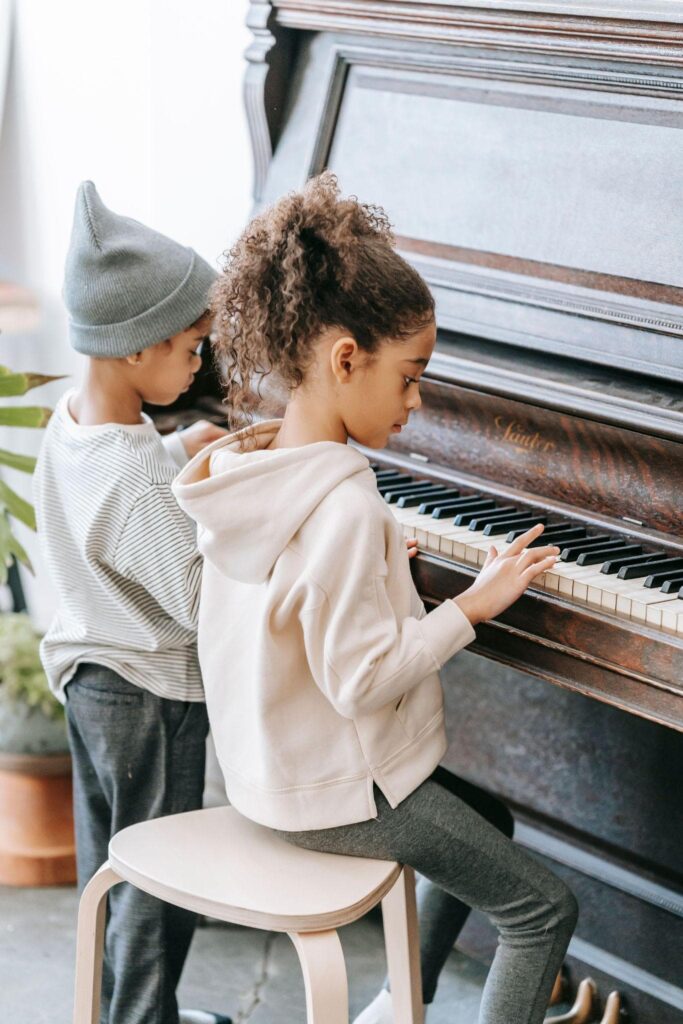
For example, in piano lessons, students first have to get used to the keyboard, hand positioning, rhythm, and the basics of reading sheet music. To an adult, this may seem elementary, but for a five- or six-year-old child, thinking about the notes, their fingers, and note values all at once is already a serious challenge.
At OPSMA, children can start learning piano around the age of five. But age alone guarantees nothing. Two children of the same age can differ greatly in terms of concentration, perseverance, and response to the teacher.
Therefore, a good initial result is by no means always determined by the number of pieces learned. Sometimes it’s much more important that the child goes to the instrument on their own after class and wants to try again.
The piano remains the most common choice, but it isn’t right for everyone
Many families start with the piano. The instrument has a straightforward logic: you press a key, and you immediately get a clear sound. You don’t have to spend months first learning how to produce the sound correctly, as you do with some other instruments.
The piano is a great way to introduce a student to notes, harmony, and rhythm. Plus, it can serve as a foundation for further musical education.
But sometimes a child is much more drawn to a different instrument.
Some show an interest in drums right from the first lesson. Usually, these students enjoy the physical nature of the lesson itself: movement, rhythm, and hand-foot coordination.
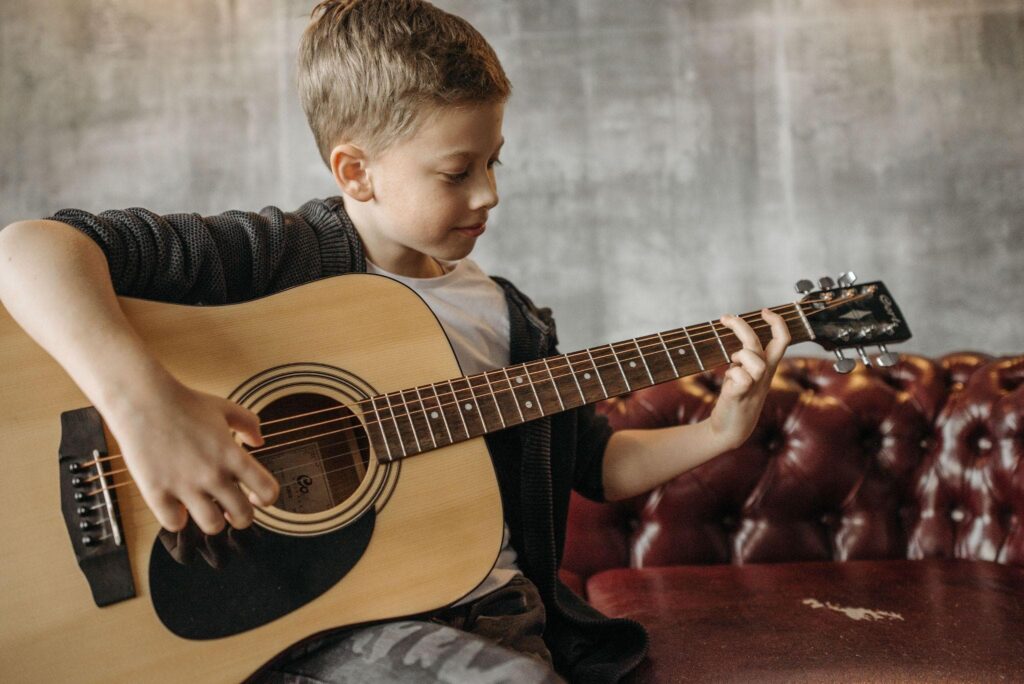
The guitar often appeals to older children and adults because they already have specific songs they want to play. When a student learns familiar chords and suddenly realizes they can play a part of their favorite song on their own, their motivation takes on a whole new dimension.
With the violin, it’s a bit more complicated. The early stages may require more patience. You have to get used to the position of the instrument, the bow, and precise intonation. But that’s exactly why progress on the violin is especially noticeable to the student themselves.
OPSMA also offers vocal lessons. And these aren’t just for those who dream of performing on stage. Some students come because they enjoy singing but aren’t confident in their voices. Others want to better control their breathing, hit the right notes, or expand their range.
Not Every Child Needs to Take an Exam
Another common misconception is the belief that music lessons must necessarily lead to exams.
For some students, this is indeed a worthwhile goal. They can prepare using the Royal Conservatory of Music curriculum and gradually progress through the levels. This format suits those who prefer a clear system and well-defined stages.
But there are children who find it much more interesting to play contemporary songs, movie soundtracks, or pieces they’ve heard online.
And that’s a perfectly valid reason to take lessons, too.
Music education doesn’t have to turn into a competition. A child can make significant technical progress without feeling the need to pass every subsequent exam.
This is especially noticeable with adult students. A person might start taking lessons at 35, 40, or 50 simply because they’ve long wanted to learn to play the piano. They don’t need to prove anything to anyone. Sometimes the goal is quite simple: “I want to sit down at the instrument in the evening and play a few of my favorite songs.”
What Happens in Art Classes
Ontario’s Professional School of Music & Arts isn’t just about music.
The school offers art classes for children starting around age five. Unlike music lessons, these classes are held in small groups.
At first glance, drawing seems like a more free-form activity. A child is given paper, paints, or pencils—and creates something. But a good art class is a bit more complex than that.
Children are gradually taught about form, proportions, color, composition, and working with various materials. At the same time, it’s important for the teacher not to turn every drawing into a copying exercise.
Children’s artwork is interesting precisely because it often differs from adults’ ideas of what “should be right.”
One child might paint the sky purple. Another might draw a cat the size of a house. And it’s not always necessary to correct such things right away.
The purpose of art classes isn’t just to teach children how to draw neat lines. They give children a space where they can experiment, make mistakes, and try again.
A music teacher is not just someone who knows how to play an instrument
Sometimes, when choosing a school, parents look first and foremost at the teacher’s credentials. This makes sense, but—especially when working with young children—professional expertise alone is not enough.
You can play an instrument beautifully and still be completely unable to explain the material to a six-year-old.
A good teacher notices when a student is getting tired, when an exercise needs to be simplified, or, conversely, when a child is ready to move on. It’s also important to understand the student’s temperament. With some, it’s better to work energetically; others need a calm pace and time to settle in.
This is especially evident with shy children. During the first few lessons, they may barely speak to the teacher.
But after a month, they’re already telling the teacher themselves which song they’d like to learn.
Such a change is sometimes more important than any formal result.