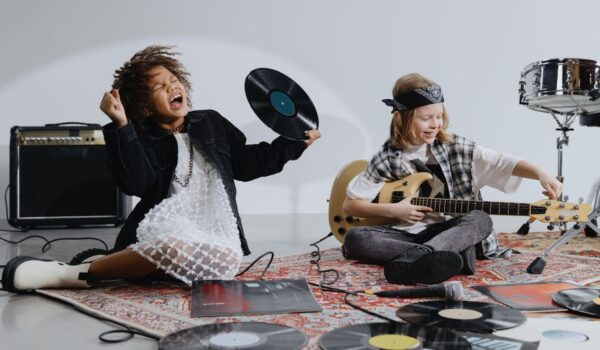
Sometimes parents enroll their child in music or art classes with a very specific goal in mind. Some want their child to learn to play the piano. Others hope that art classes will help their child become more meticulous. And still others are simply looking for an after-school activity that doesn’t involve a screen.
But the most interesting things often happen where parents least expect them.
A child starts piano lessons and, for several weeks, can’t even play a short melody in tune. Then, suddenly, one day, they get it right. In art class, they start out constantly asking, “Is this right?”—but a few months later, they’re already choosing their own colors and arguing with the teacher that the sky in their painting should be green.
At first glance, these seem like small things. But in reality, it’s precisely in moments like these that the true value of creative activities becomes apparent.
A child learns not to be afraid of not getting something right the first time
At school, a child quickly gets used to the system: there’s a right answer and a wrong one. Solve the problem correctly—well done. Make a mistake—fix it.
In music, things are a little different.
You might know the notes but play too fast. You might hit all the right keys but lose the rhythm. You might learn a piece all the way through but play it with absolutely no character.
It turns out that the result isn’t determined by a single “right” or “wrong,” but by a multitude of small attempts.
For children, this is a valuable experience.
They gradually come to understand that a mistake isn’t the end of the task. Sometimes you just need to repeat a single measure five times. Then again. Then slower. And only after that does everything start to come together.
The situation is similar in art classes. Did the line turn out too thick? You can turn it into a shadow. Did the color turn out darker than you wanted? Sometimes it unexpectedly makes the drawing more interesting.
This habit of looking for a solution instead of getting discouraged right away eventually carries over into other areas of life.
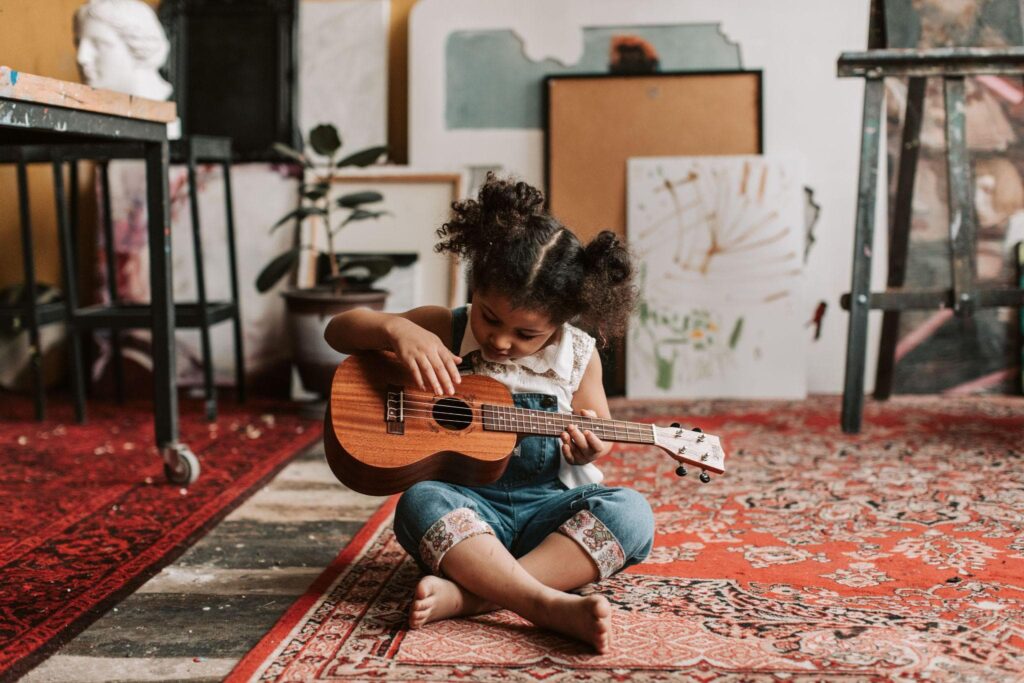
Music makes the brain work in several directions at once.
Try to recall what happens when a child plays the piano.
They look at the sheet music, keep track of the rhythm, move both hands, remember finger positions, and at the same time listen to how it sounds.
For an adult musician, much of this happens automatically. For a beginner child, it’s quite a challenge.
And that is exactly why music lessons are great for training attention.
This is especially noticeable with young children. At first, they may get distracted every few minutes. Then, little by little, they begin to hold their attention longer, because without it, they can’t finish even a short piece.
But there’s an important point here: music works best when the child is interested.
If the entire lesson turns into an endless repetition of boring exercises, concentration may indeed improve, but the love of music will fade much more quickly.
That’s why a good teacher usually strikes a balance between technique and what the child actually wants to play.
Drawing provides something that children often lack throughout the day
Most of a child’s schedule is structured around instructions.
At school, they have to complete an assignment in a certain way. At sports practice, they have to repeat a movement. At home, they have to do their homework, tidy up, and get ready for the next day.
But in an art class, sometimes they can do something simply because they want to.
This is a rather rare kind of freedom.
A child can choose an unusual color, invent a character, change the plot, or draw an object in a way that’s completely different from how it looks in real life.
That’s exactly why a child’s drawing shouldn’t always be judged from an adult’s perspective: “But trees aren’t blue.”
Yes, they aren’t blue.
But the child probably isn’t trying to draw a photograph right now. They’re simply experimenting.
Through such experiments, children develop confidence in their own decisions—not a loud, ostentatious confidence, but a calm sense that “I can come up with something on my own.”
Creative activities help children become more patient
This quality rarely develops after just one conversation.
You can tell a child a hundred times, “You need to be patient.” But they understand it much better when they’re learning a piece of music or finishing a complex drawing.
Some things can’t be rushed.
You can’t learn to play the guitar well in just two lessons. You can’t master perspective, shadows, or color mixing in a single session.
You have to keep coming back to the same skill over and over.
For children who are used to instant gratification—a video starts playing, a game loads, a result appears—this is a particularly valuable experience.
Music and art offer a slower kind of enjoyment.
It’s hard at first. Then it gets a little easier. And then the child suddenly realizes they can do something they couldn’t a month ago.
That feeling is hard to replace with praise.